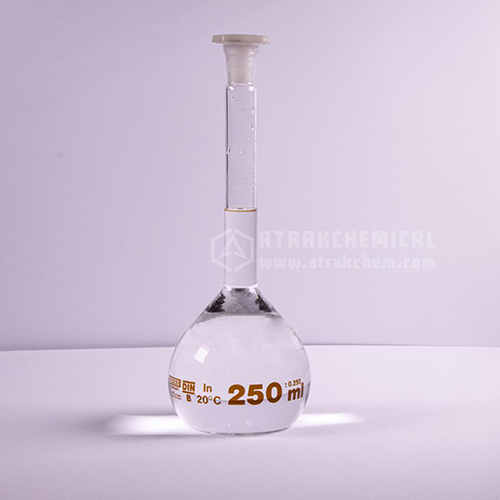
Appearance of material:
Material applications:
- Chemical laboratories
- As a cleaner for laboratory equipments
- Medicine and cosmetics industry
- In the textile industry
- Plastic welding
- In the electronics industry
- The environmental industry
- The paint and ink industry and production of thinner
- Raw material for many polymers such as polycarbonates, polyurethanes, and epoxy resins.
- Preparation of polymer and thermal coatings
Material safety conditions:
- Acetone should not be drunk or smelled due to its toxicity.
- Excessive exposure to this chemical causes anesthesia and damage to the nasal mucosa and damage to the kidneys and liver.
- Excessive skin contact with this chemical causes skin irritation and damage.
- If swallowed, take the person to the nearest medical center and hospital immediately.
- In case of fire, water is not effective in extinguishing the fire because it does not have the ability to lead this material to the point of ignition, so carbon dioxide and dry chemical powder should be used to extinguish the fire.
- In case of contact with skin of hands or eyes, wash immediately with lukewarm water and if swallowed, wash mouth with water.
- A mixture of this chemical material and air at a temperature above its flash point will cause an explosion and ignition.
Material storage conditions:
- This material is highly flammable and burns quickly at room temperature.
- Flammable items should be avoided around it.
- This material should be stored in a cool, dry place with adequate environmental ventilation and away from heat and combustible sources.
- Safety items such as goggles, appropriate work clothes, gloves, etc. should be observed during work.
Although acetone itself is flammable, it is used as a solvent for the transport and storage of acetylene.