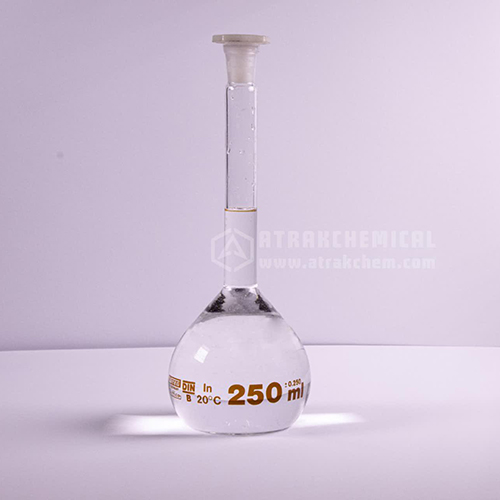
Appearance of material:
Material applications:
- Making different plastics
- Manufacture of industrial coatings
- Production of adhesives
- Making elastomers
- Production of flooring
- Color production
- Production of various gels
- Textile industry
- Detergent products
- Food packaging (used as an antibacterial agent.)
- Ink industries
- Production of chemicals oil and oil refining
- Leather making industry
- Pharmacy to produce tablet coatings
Material safety conditions:
- Because unstable acrylic acid has a high tendency to form polymers, this polymerization process can be carried out by light or by strong oxidants such as hydrogen peroxide (hydrogen peroxide) and nitric acid explosively.
- Exposure to these acids on a regular or even mild basis can irritate the skin and respiratory system.
- Acrylic acid concentrate, if swallowed, can cause severe burns in the mouth and gastrointestinal tract.
Material storage conditions:
- This material is sensitive to heat and direct sunlight and easily ignites at a temperature of ℃ 68 in the vicinity of the open air. Therefore, acrylic acid is best stored at a temperature between 15% and 25%.
- It is highly corrosive to most metals such as steel, copper, silver, brass, but is compatible with stainless steel. Therefore, stainless steel tanks are generally used for keeping and storage.
- Acrylic acid is incompatible with strong oxidants, strong alkalis, and pure nitrogen.
- It is polymerized in contact with amines, ammonia, chlorosulfonic acid, iron salts and peroxides.
Sensitive to heat and sunlight and should be stored in a cool, dry, well-ventilated chemical store free of all combustion sources.